Role: Lead Product Designer + Systems Architect
Project: Net-new insurtech platform
Released: 2025
Loti Design System
Scaling a disaster relief platform from zero with a robust system

CONTEXT & STAKES
Pre-seed, 4-person startup racing to launch ahead of the California wildfire season deadline for a first-of-its-kind insurtech relief platform. We needed a scalable system to enable rapid iteration under extreme time pressure while ensuring developer handoff velocity and future growth.
MY ROLE & COLLABORATORS
I operated as the lead product designer and systems architect across multiple workstreams. Building a net-new Figma component library and Storybook documentation from the ground up. Team met twice a week for development syncs to align on progress, implications, and any gaps.
PROBLEMS & INSIGHTS
User Pain Points
No existing patterns for novel disaster relief UX
Rapid feature evolution outpacing ad-hoc design
A small team needed maximum consistency & scalability
Technical Pain Points
Developer handoff was critical for launch velocity
Needed to future-proof tokens (i.e., dark mode, accessibility, etc.)
STRATEGY & KEY DECISIONS
Cards as a unifying primitive
Photos, documents, and expenses unified under a consistent card framework. Established visual/structural consistency across core inventory experiences despite rapid feature changes.
HCT colors for future flexibility
Harmonious Color Tokens enabled dark mode readiness, accessibility compliance, and brand expression flexibility from day one, critical for long-term scalability.
Lexend type system for clear weight
Free, sans-serif font with robust weights created a clear hierarchy for dense inventory, financial, and timeline data. Established type scale guiding all product surfaces.
Filter/side panel patterns for complex data
Elevated filters + robust side panel states (open/close, tabbed content) handled multi-dimensional data.
AI-powered photo analysis workflows
Designed patterns for AI object detection (pre/post-disaster photos) to automate inventory validation. Established a UX framework for AI-driven insights in relief workflows.
SOLUTION
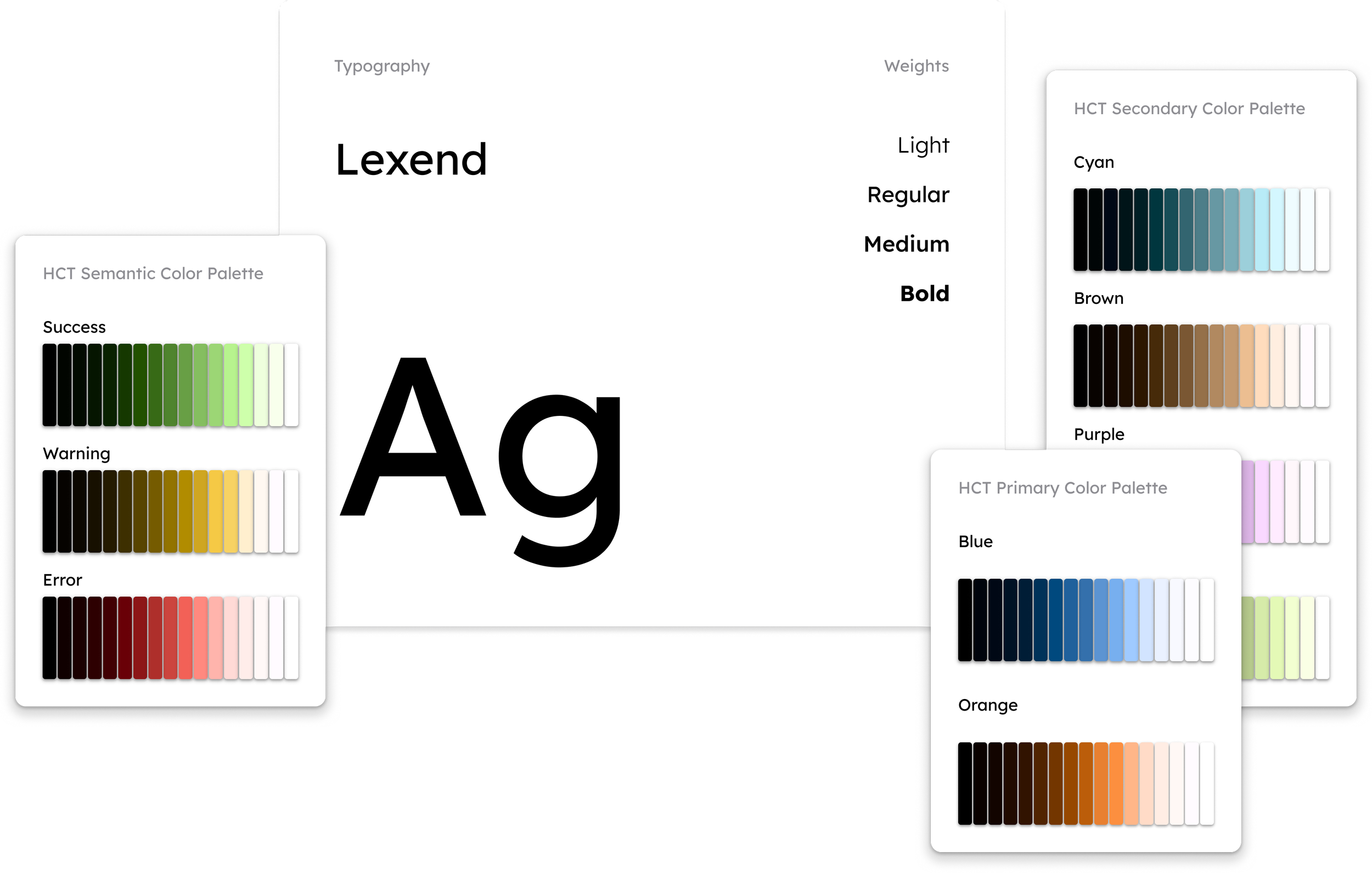
Foundation
Establishing the underlying system for how the brand is perceived before creating the key interaction components.
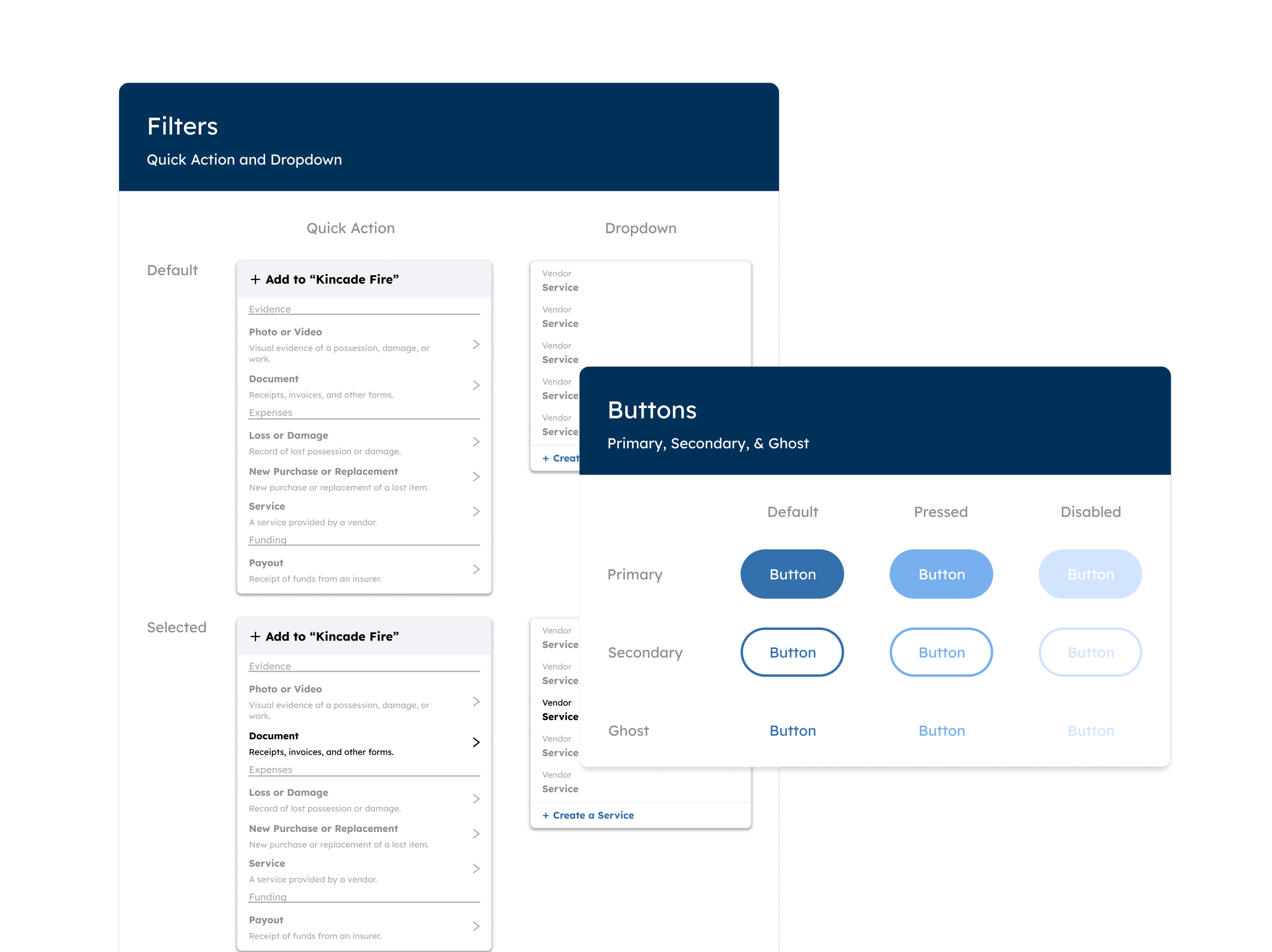
Interation
Developing the key interaction component sets to help aid in rapid development and production.
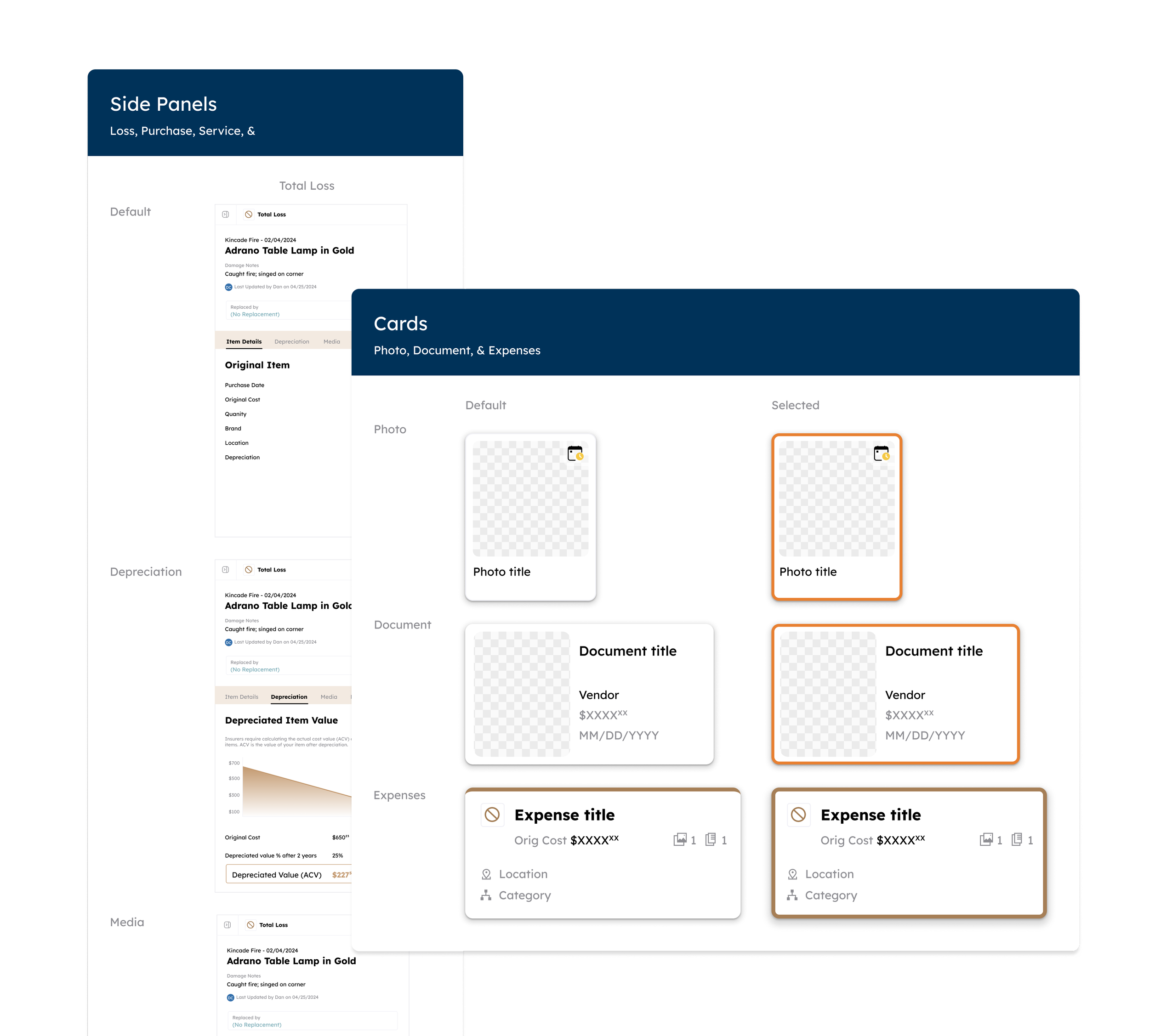
Structure
Cards unify photos, documents, and expenses into a consistent pattern, so new features can be added quickly without the product feeling piecemeal.
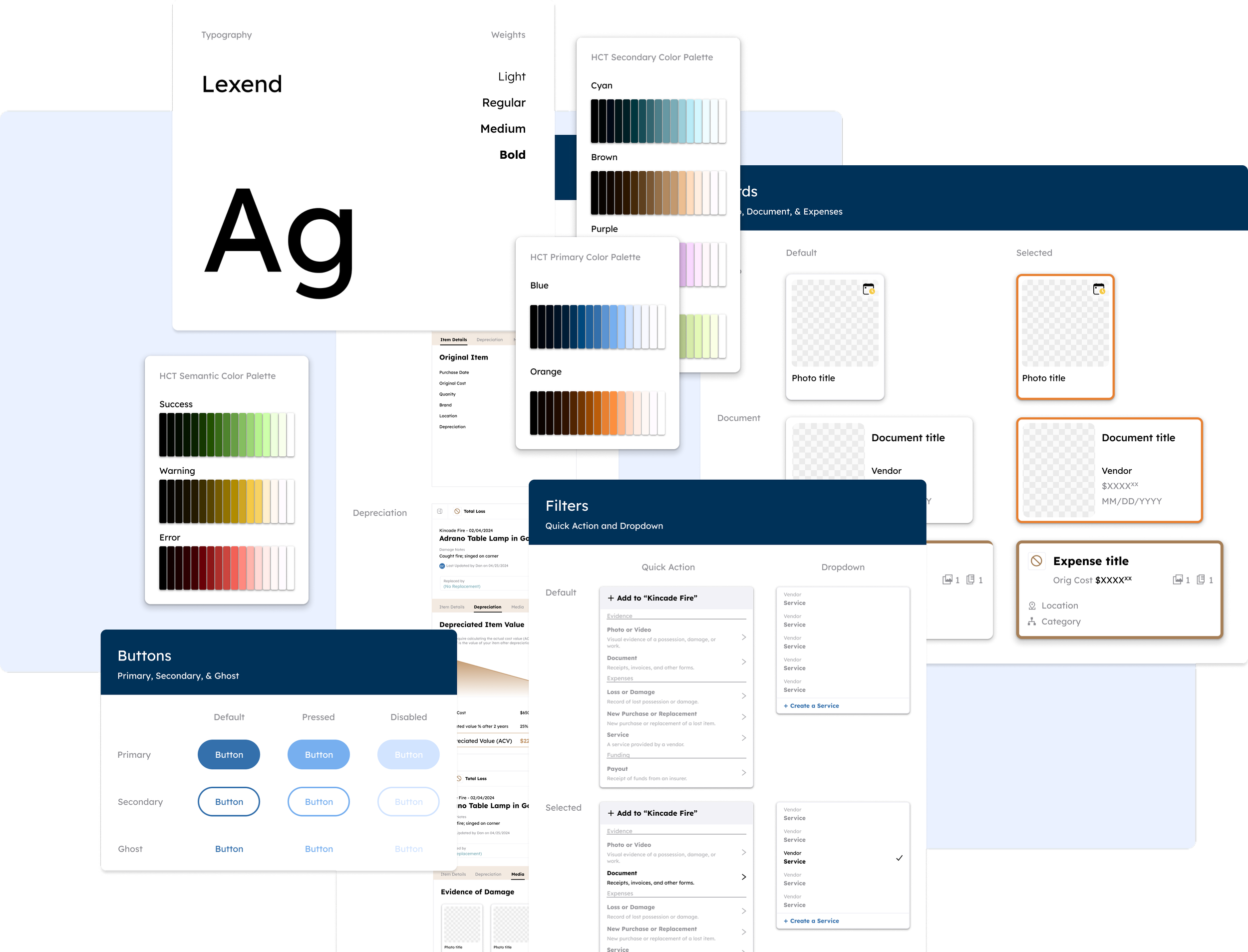
System overview
Documented a reusable system in Figma, giving designers and engineers a single source of truth for components and states.
OUTCOMES
Accelerated prototyping & development velocity for 4-person team
Zero design debt at launch despite rapid iteration
Scalable foundation enabling future features (AI-workflows + dark mode)
WHAT I LEARNED
For the Organization
Zero-to-one systems foundation accelerated launch velocity and positioned Loti for rapid expansion.
For Myself
Applied product, branding, and architecture thinking to build scalable design systems under extreme constraints.