Role: Lead UX Designer + Strategist
Project: New device lifecycle platform
Released: 2026
Xfinity Mobile Trade-in
Building an in-app trade-in engine that reduces churn & support calls
CONTEXT & STAKES
The existing device trade-in experience was fragmented across multiple touchpoints (web, commerce, stores) that did not communicate with each other. Bring-your-own-device customers rarely engaged in the app and saw little reason to stay, and there was no single source of truth for trade-in status, which drove anxiety and “Where’s my device?” support calls.
Trade-in is directly tied to churn reduction, upgrade cycles, and new always-on promotions. Customers lacked visibility into these benefits, hurting both experience and revenue.
We needed to create a net-new, native trade-in experience that: connects app and commerce flows, exposes status transparency, and showcases the full lifecycle of purchasing and returning a device for a discount, while aligning with, and improving on, the existing web experience.
MY ROLE & COLLABORATORS
I led UX for the in-app trade-in experience, from defining the end-to-end journey to designing the dashboard and logic patterns.
I partnered with product managers, engineers, web and commerce teams, and content stakeholders to unify logic and flows across channels, while addressing known failure points in the existing journeys.
PROBLEMS & INSIGHTS
User Pain Points
No visibility into trade-in status → anxiety and a high volume of “Where’s my device?” support calls.
Fragmented touchpoints → unclear where to start a trade-in, track progress, approve adjusted offers, or return devices.
Missed promotion opportunities → many customers didn’t realize they could keep service, upgrade devices, and receive credits through trading in their device.
Business Pain Points
Different logic and eligibility rules across web, commerce, and app → inconsistent offers and messaging.
No shared source of truth for status → internal misalignment and duplicate support work

Foundational Analysis
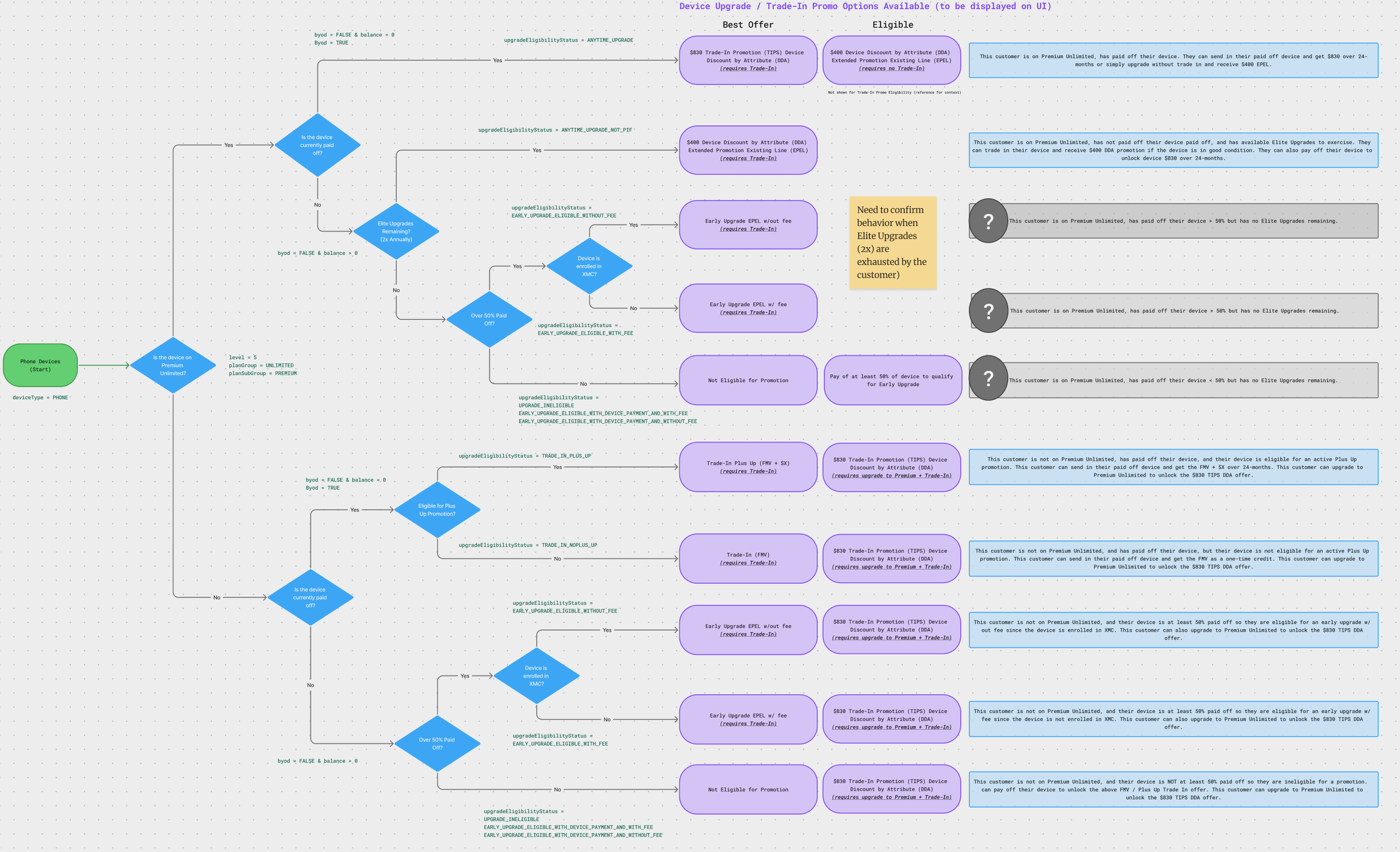
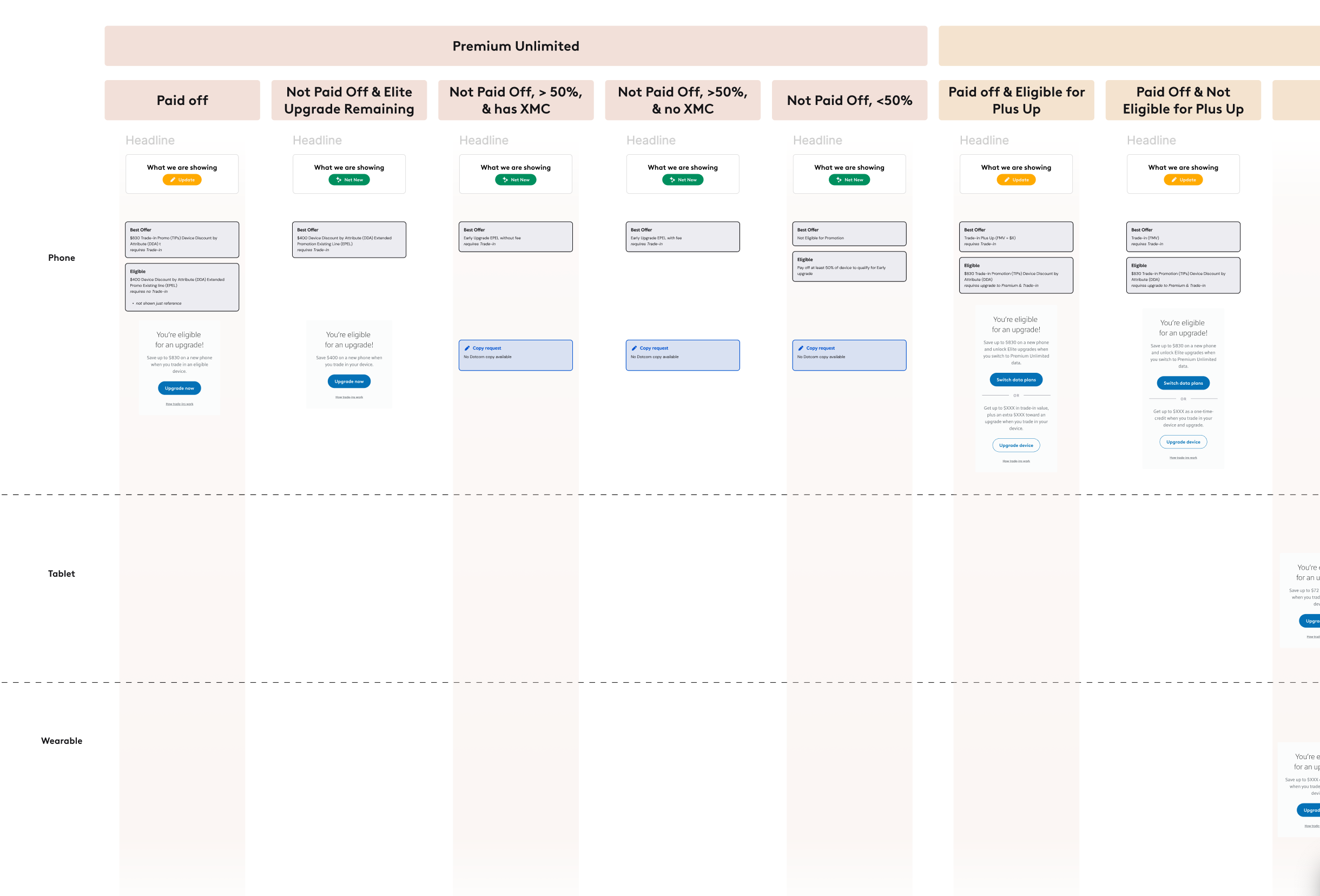
Created a decision tree with PMs, engineering, and web partners to map services, promotions, eligibility rules, and edge cases.
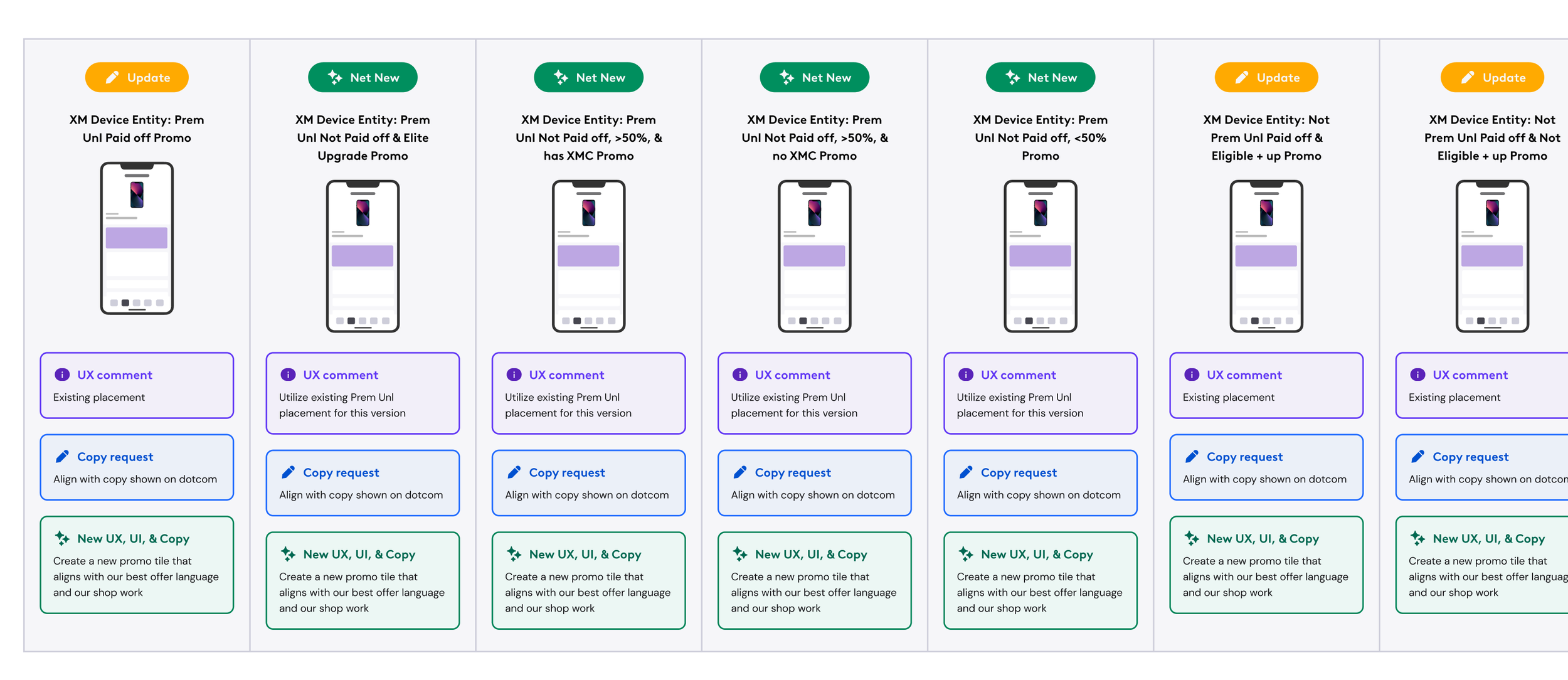
Built a permutation chart to understand how offers were positioned on the web and what the app would need to show for parity and clarity.
Developed an impact map to identify what the new dashboard would touch, what belonged in MVP vs Post-MVP, and socialized with stakeholders for alignment.
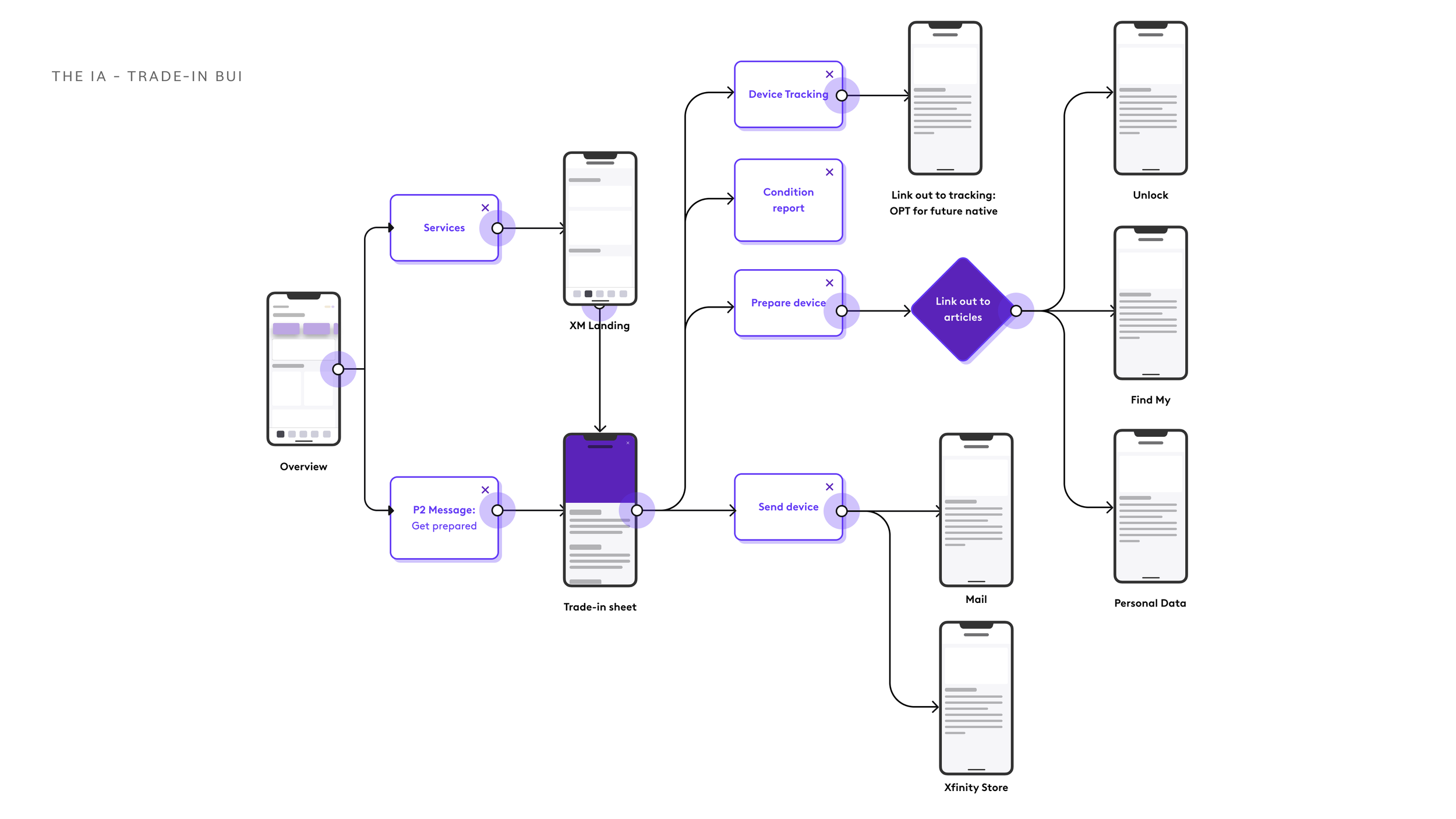
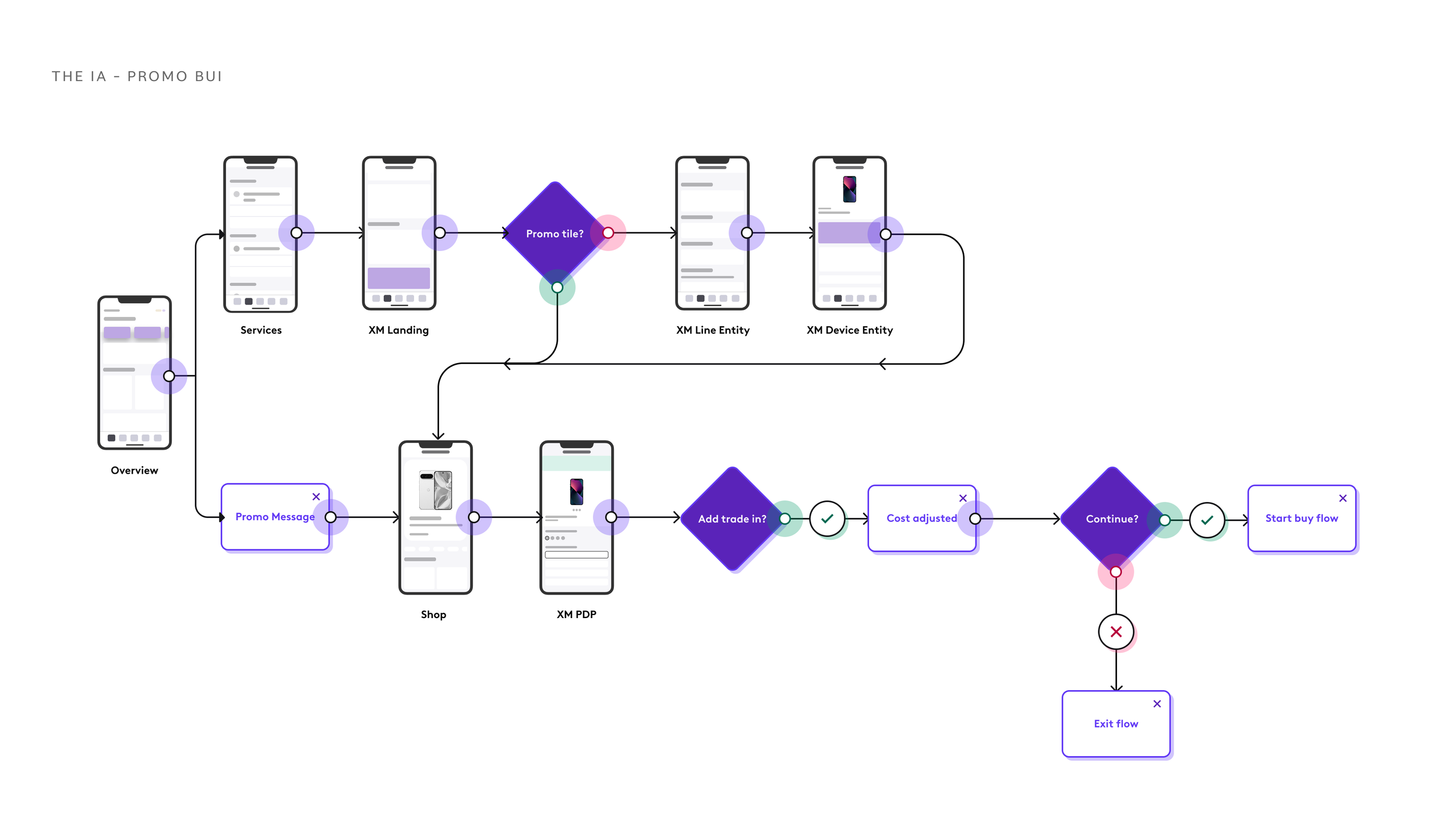
Mapped the information architecture across app, web buy-flow, and back into the app to ensure a coherent end-to-end journey.
STRATEGY & KEY DECISIONS
Created a single in-app hub for trade-in
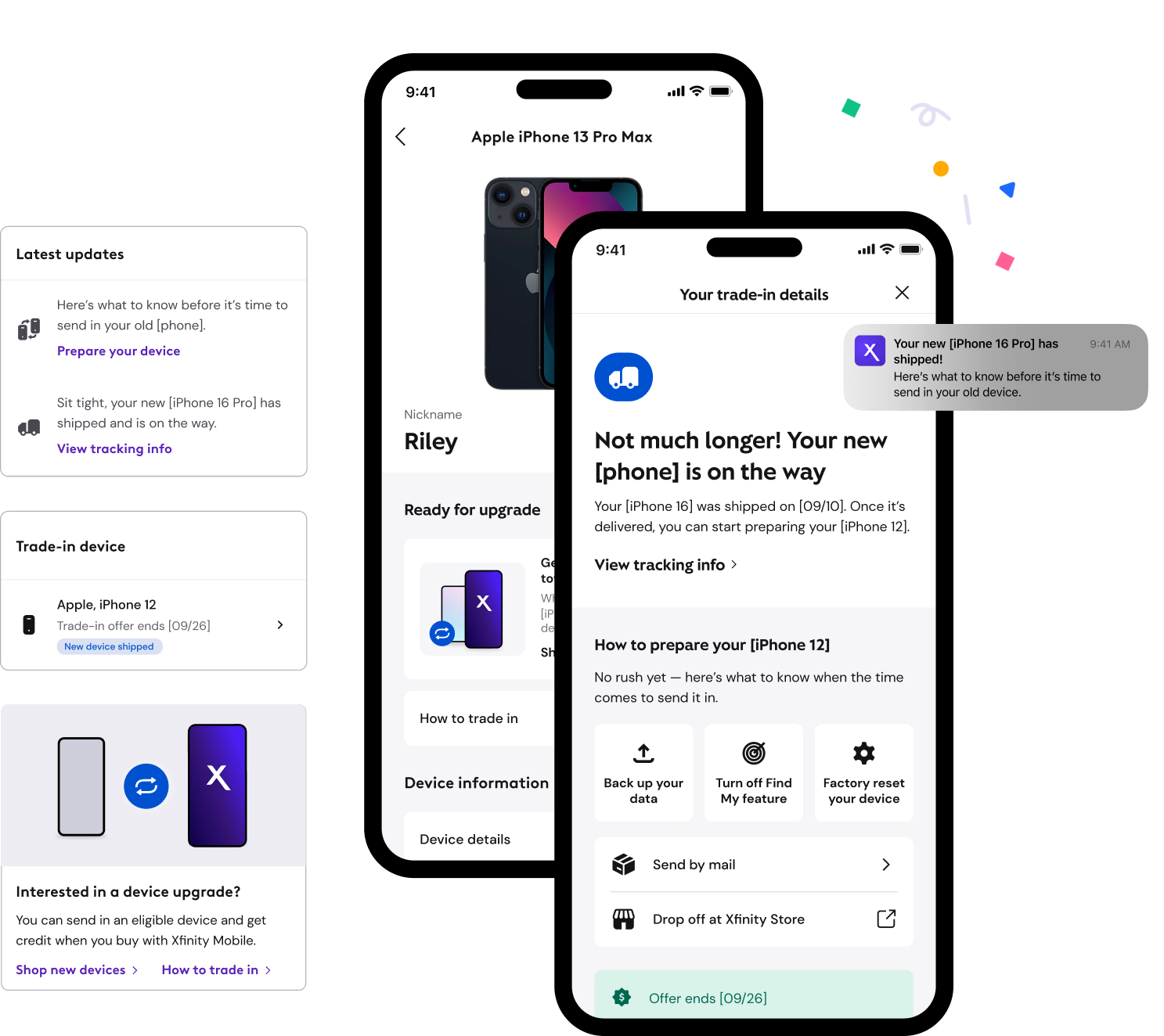
We introduced a dedicated trade-in dashboard as the primary surface for status, offers, and next steps. It is easy to return your device at any point in the journey, reduces “Where’s my device?” calls, and positions the app as the lifecycle hub for devices and services.
Unify promotion and eligibility logic across channels
Working with web and back-end partners, we turned the decision tree into a shared logic engine for promotion eligibility and “best offer” selection. Consistent promos and rules across web and app reduce confusion and make always-on offers feel trustworthy.
Clarify the lifecycle end-to-end
We defined clear status patterns and states (device mailed, received, graded/adjusted, credit applied) and surfaced them directly in the dashboard. This transparency reduces anxiety around shipping an expensive device and provides context when customers do need support.
Make promotions a lifecycle entry point, not a one-off campaign
We placed evergreen trade-in promotions and education in relevant parts of the app so customers see ongoing value: upgrade opportunities, savings, and device lifecycle milestones. This shifts trade-in from a one-time offer to a recurring retention lever.
SOLUTION
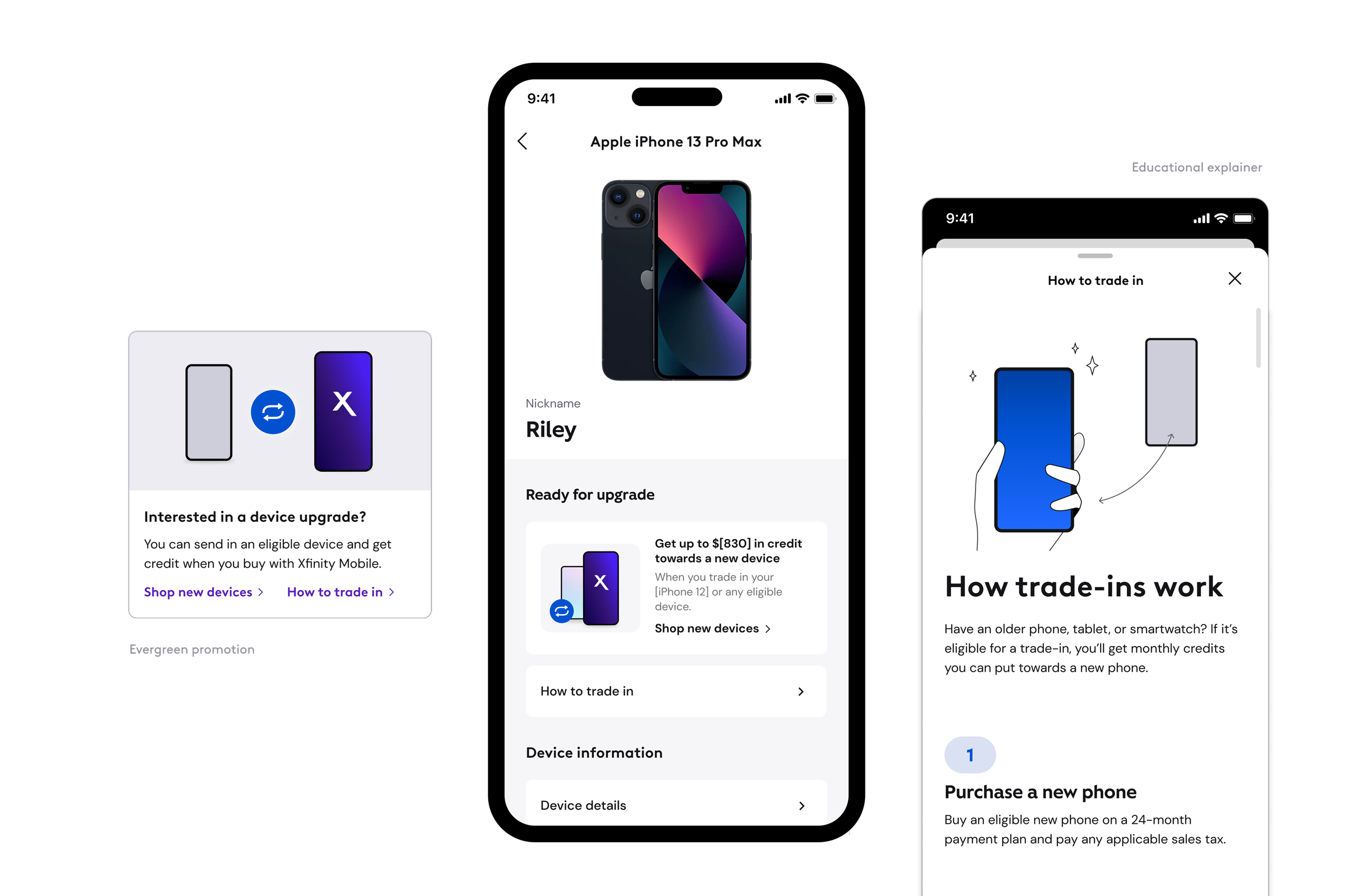
Promotion & entry points
Moments that show users how to discover trade-in, like always-on promotions and contextual placements, and how users navigate back to the dashboard.
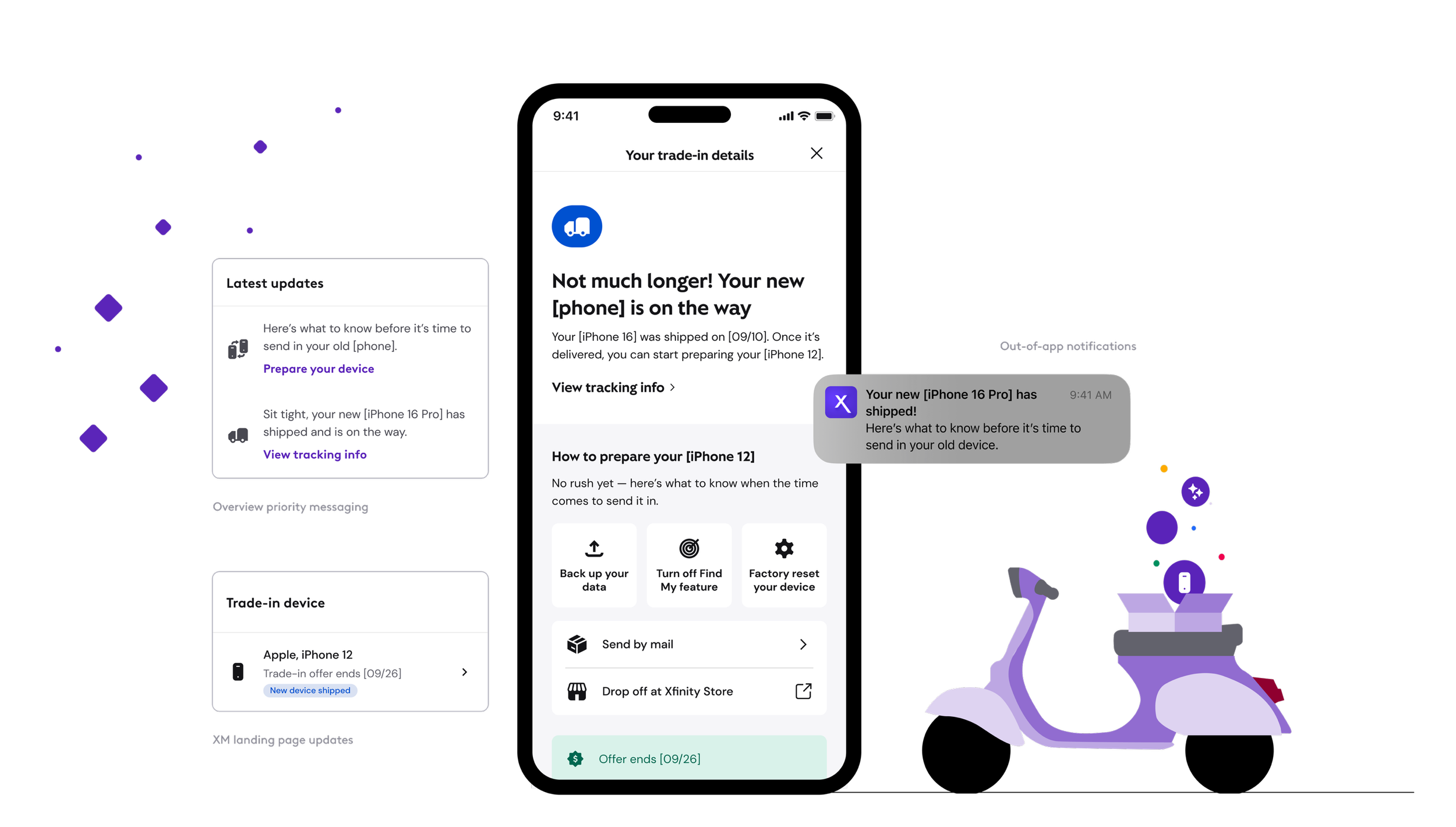
Trade-in dashboard
Unified view showing device details, current status, next steps, and any pending actions.
OUTCOMES
Positioned the app as the one-stop hub for device lifecycle, not just account & service management
Established a reusable trade-in logic engine, now being extended to two additional workstreams: device swapping & moving services between homes
Created a shared status model and logic artifacts that partner teams (web, commerce, support) now use as the basis for future improvements
Post-launch, we expect to see reductions in “Where’s my device?” support calls and increased engagement with always-on trade-in promotions, and we’ve defined metrics & dashboards to track both
WHAT I LEARNED
For the Organization
We moved from fragmented, channel-specific trade-in flows to an integrated lifecycle platform with clear connections between app, web, and operations
All partners now share a single logic artifact and status model, making future device experiences faster and less error-prone to build
The app’s role in the mobile lifecycle is clearer, enabling future activations, swaps, and upgrades to plug into the same foundation
For Myself
This work deepened my lifecycle strategy skills and my ability to shape cross-channel information architecture at scale
It strengthened my collaboration patterns with external teams (web, commerce, support), building trust that will accelerate future multi-team initiatives